The Paving Window is Closing: What Multi-Site Portfolios Should Complete Before the Season Ends
Commercial Asphalt Maintenance Is a Planning Decision, Not a Break-Fix Line Item
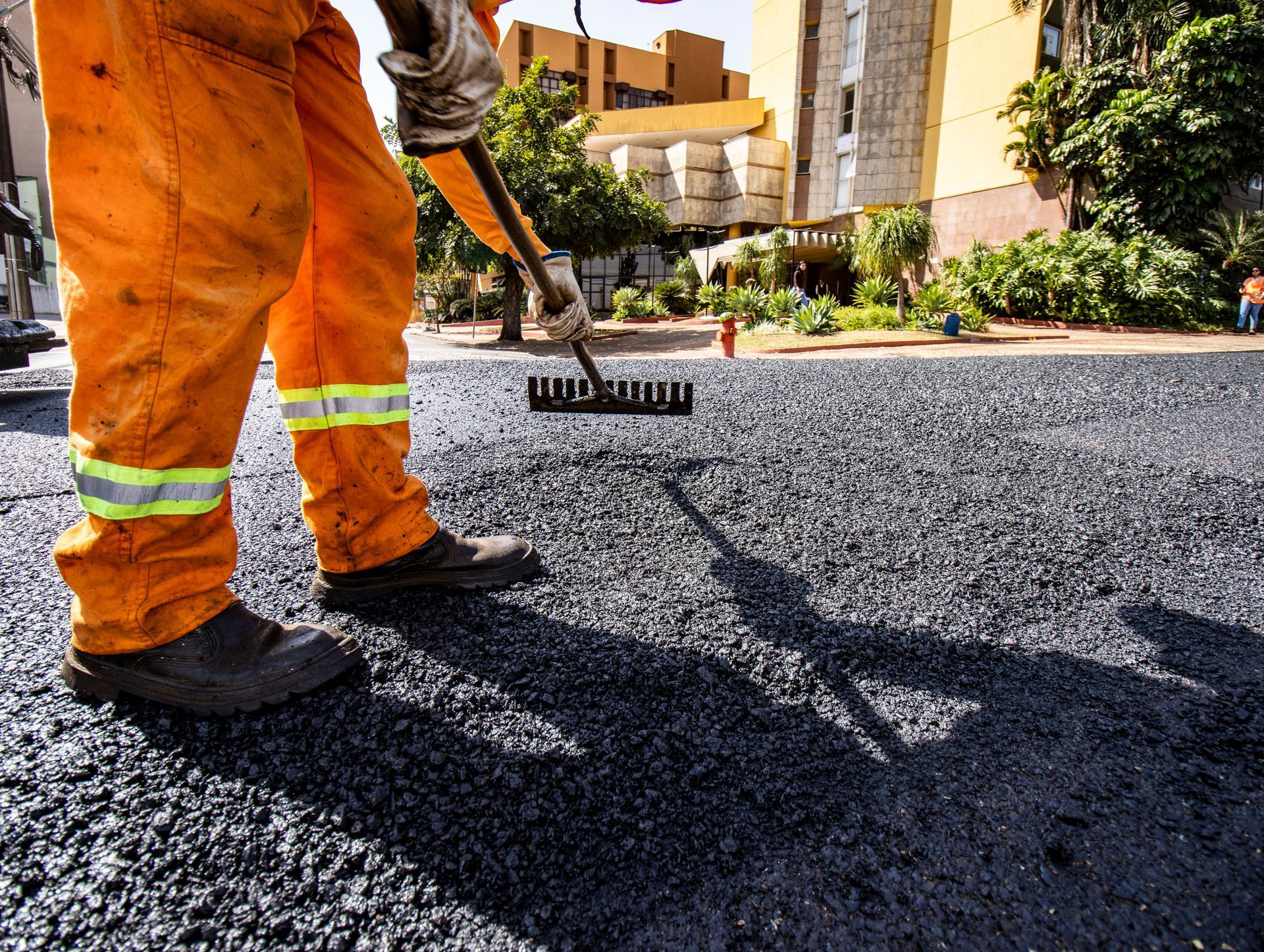
Pavement work is often treated as a break-fix line item, addressed once a pothole gets deep enough to generate a complaint or a tenant escalation. In practice, asphalt behaves more like a depreciating asset moving along a predictable curve, and the calendar decides how much of that curve is still workable. In northern markets, the paving season starts to close in early October. Contractor availability is already tightening, and crews are booking into September. For portfolios with pavement projects still sitting in the “next year” column, now is the time to decide which areas require maintenance.
Paving is a Temperature-Dependent Process, Not a Year-Round Service
Asphalt has physical requirements that no amount of scheduling pressure can override.
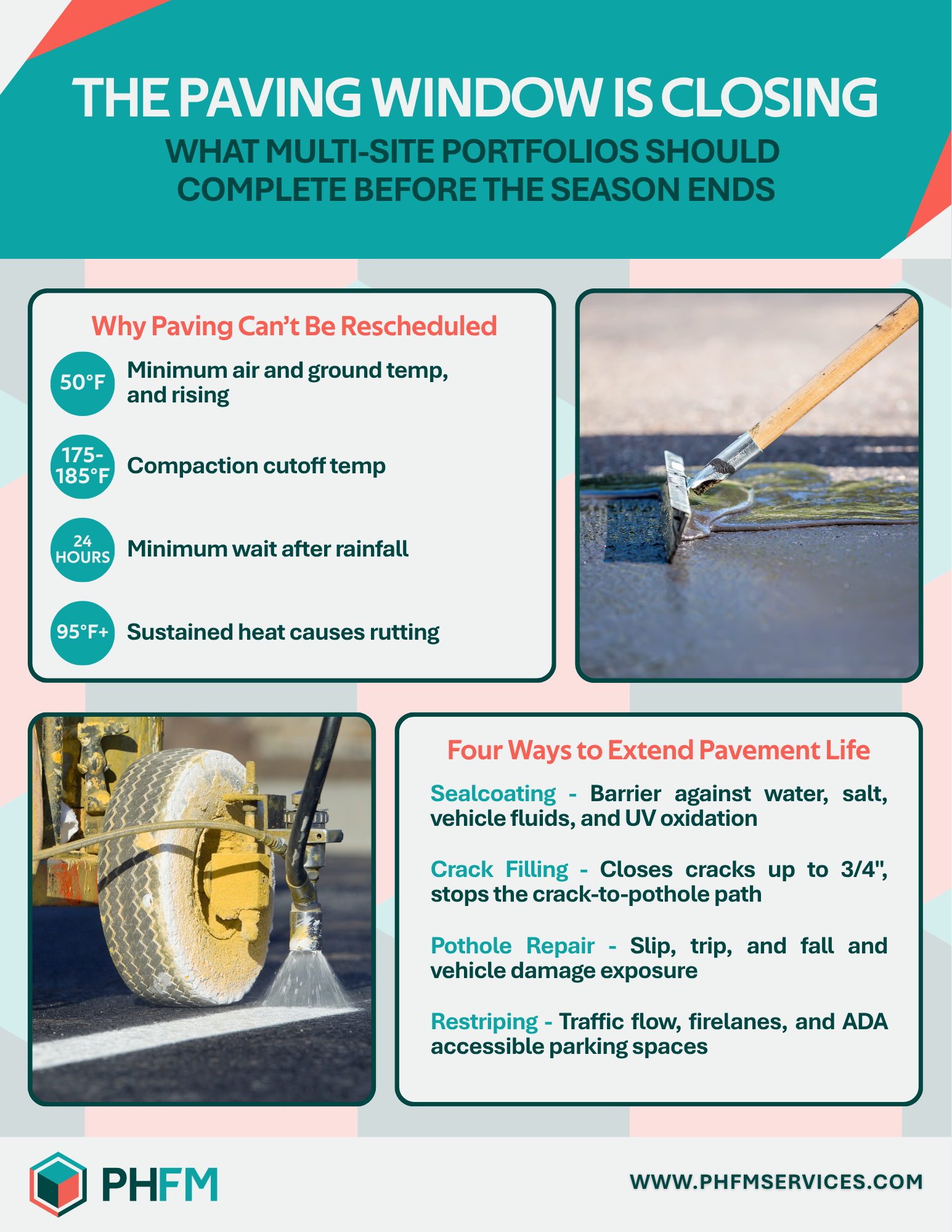
Applications require ambient air and ground temperatures of at least 50°F and rising during installation and compaction. Ground temperatures matter just as much as air temperature and are frequently lower, particularly in early morning after a cold night. A cold base pulls heat off fresh asphalt quickly, compressing the window a crew has to reach proper density.
That window has a hard edge. The Asphalt Institute’s guidance is that compaction must be completed before the internal temperature falls below its cessation temperature, generally in the 175°F to 185°F range depending on the project. Below that point, the mix is still too stiff to compact effectively. The result is air voids, low density, and a surface that cracks and ravels years ahead of schedule.
Moisture is equally disqualifying. Asphalt should never be placed in the rain, and crews should generally wait at least 24 hours after rainfall, longer if the ground is saturated. Water trapped under hot asphalt interferes with bonding and can produce blistering. At the other extreme, sustained heat above 95°F can keep the binder from firming up, leading to rutting under heavy traffic.
Late spring through early fall is the practical season, with September and early October often being ideal. And that is precisely the window now narrowing.
What Belongs in a Preventive Paving Maintenance Plan
A preventive program is a sequence of treatments applied at the right condition threshold, not a single service.
Sealcoating creates a protective barrier against water, road salt, vehicle fluids, and other contaminants, while slowing the UV-driven oxidation that turns flexible asphalt brittle. It also restores a clean, uniform appearance across a lot. The Pavement Coatings Technology Council has estimated the 12-year total cost of a commercial maintenance program that includes seal coating at roughly $0.39 per square foot, compared with about $1.76 per square foot for unsealed pavement that requires an overlay at the end of that period.
Crack Filling addresses the larger cracks, up to approximately three-quarters of an inch, that sealcoating alone cannot close. Sealing those openings keeps water out of the pavement structure, protecting the binder and aggregate beneath the surface, reducing freeze-thaw damage, and slowing the progression from crack to pothole.
Pothole Repair is a safety issue before it is an appearance issue. Potholes create slip, trip, and fall exposure for pedestrians and damage risk for vehicles. Repairing them promptly also prevents localized failure from spreading into full-depth repair or replacement.
Restriping defines parking spaces, traffic flow, crosswalks, and fire lanes, which supports both circulation and emergency access. It also carries a compliance dimension that multi-site operators should plan around: under Department of Justice guidance, when a facility restripes a parking lot it must provide accessible parking spaces meeting the 2010 ADA Standards. The required count is calculated per parking facility and one out of every six accessible spaces must be van accessible with a minimum of one, and access aisles must be marked to discourage parking in them.
Why Early Intervention Costs Less
Asphalt doesn’t wear out evenly. It holds up well for years, then declines quickly. According to Pavement Interactive, pavement condition typically drops about 40% over the first three quarters of a lot’s life, then loses another 40% in a small fraction of that time. The early years are quiet. The back end is where potholes, base failure, and full-depth repair appear.
That’s why timing is an important factor to consider. Waiting even two to three years past the point where a lot should have been treated can multiply restoration costs several times over because the required fix changes.
Asphalt declines slowly for years, then fails quickly. The surface oxidizes and stiffens long before anything visible happens. Once water reaches the base, the damage stops being a surface problem, and surface repairs stop working.
Planning Around the Close of the Season
Preventive pavement work is time-bound in a way most facility services are not. Sealcoating, crack filling, pothole repair, and restriping each depend on temperature, sequence, and on a season coming to an end quickly. Portfolios that complete this work before conditions close protect their parking lots through the freeze-thaw months and enter next spring without a backlog of deferred repairs.
PHFM coordinates pavement assessment, prioritization, and scheduling across multi-site portfolios through one point of contact, a vetted contractor network nationwide, and MetryXTM, tracking pavement conditions and work order status site by site, so preventive spend can be planned across a portfolio.
Contact PHFM to review pavement conditions across your locations before the season closes.