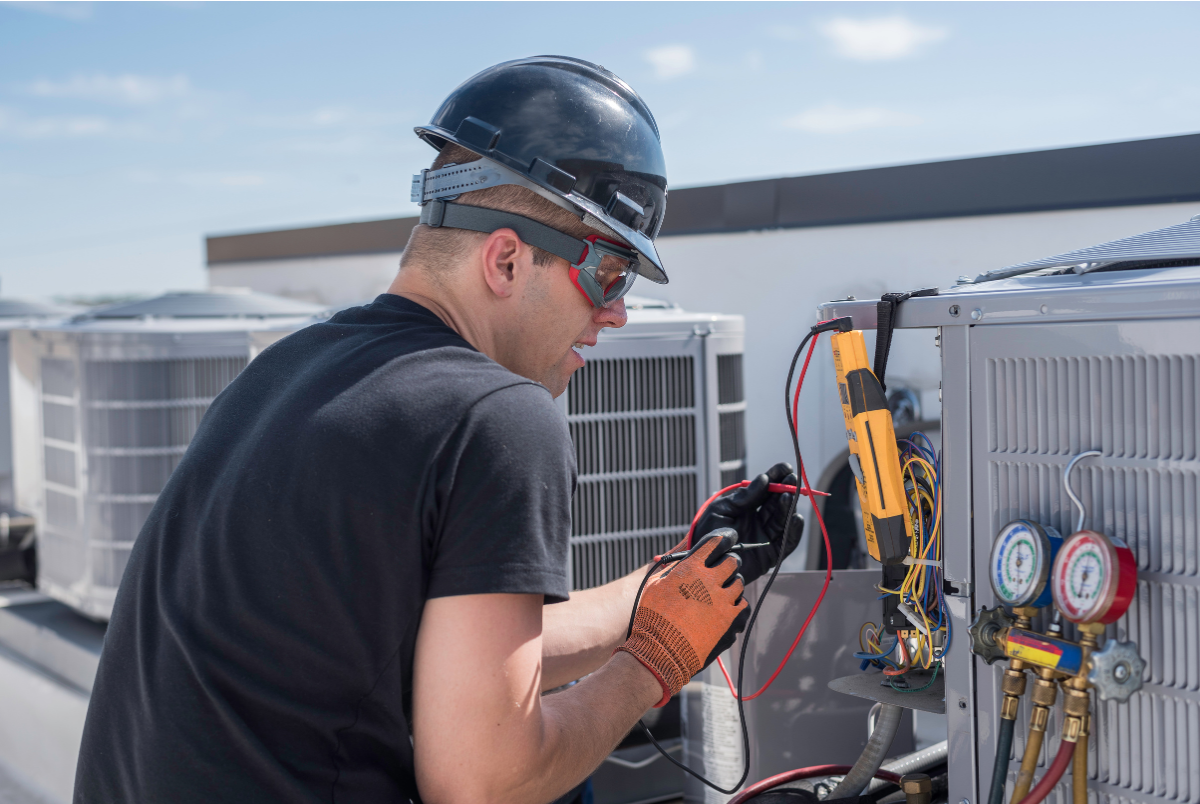
Holiday Peak Season Readiness: What Multi-Site Portfolios Should Address Before the Busiest Weeks of the Year
The weeks between Thanksgiving and New Year’s are the busiest of the year for many commercial facilities. Shoppers fill retail, grocery, and c-store locations, and the National Retail Federation forecasts that U.S. retail sales from November 1st to December 31st will reach $1.013 trillion in 2026. Restaurants and hotels see their own steady stream of holiday gatherings, travelers, and guests. Every one of those visits depends on a building that is open, warm, well lit, and safe to walk into.
That makes the holiday season the highest stakes stretch of the year for facilities. More shoppers, longer hours, and colder weather add strain to HVAC systems, lighting, restrooms, and parking lots at the exact moment a failure would be most disruptive.
For multi-site portfolios, the stakes are raised. A broken heater or icy entrance at one location is a problem. The same issue across dozens of locations can disrupt operations and the customer experience all at once. Facilities teams preparing dozens or hundreds of sites for the holidays can work with PHFM to build a plan before traffic peaks.
Why the Holiday Season Raises the Stakes
Several pressures arrive at once between November and January:
- Heavier Foot Traffic: More customers mean more use of restrooms, entrances, doors, and flooring, and less tolerance for anything out of service.
- Colder Weather: Heating systems run harder, pipes are at risk of freezing, and snow and ice create hazards in parking lots and exterior walkways.
- Shorter Days: Earlier sunsets mean exterior lighting carries more of the load during operating hours.
Together, these pressures make any failure more costly during this window. A closed restroom or a cold sales floor in December affects sales, frustrates customers, and puts pressure on staff.
How Can Multi-Site Portfolios Prepare for the Holiday Season?
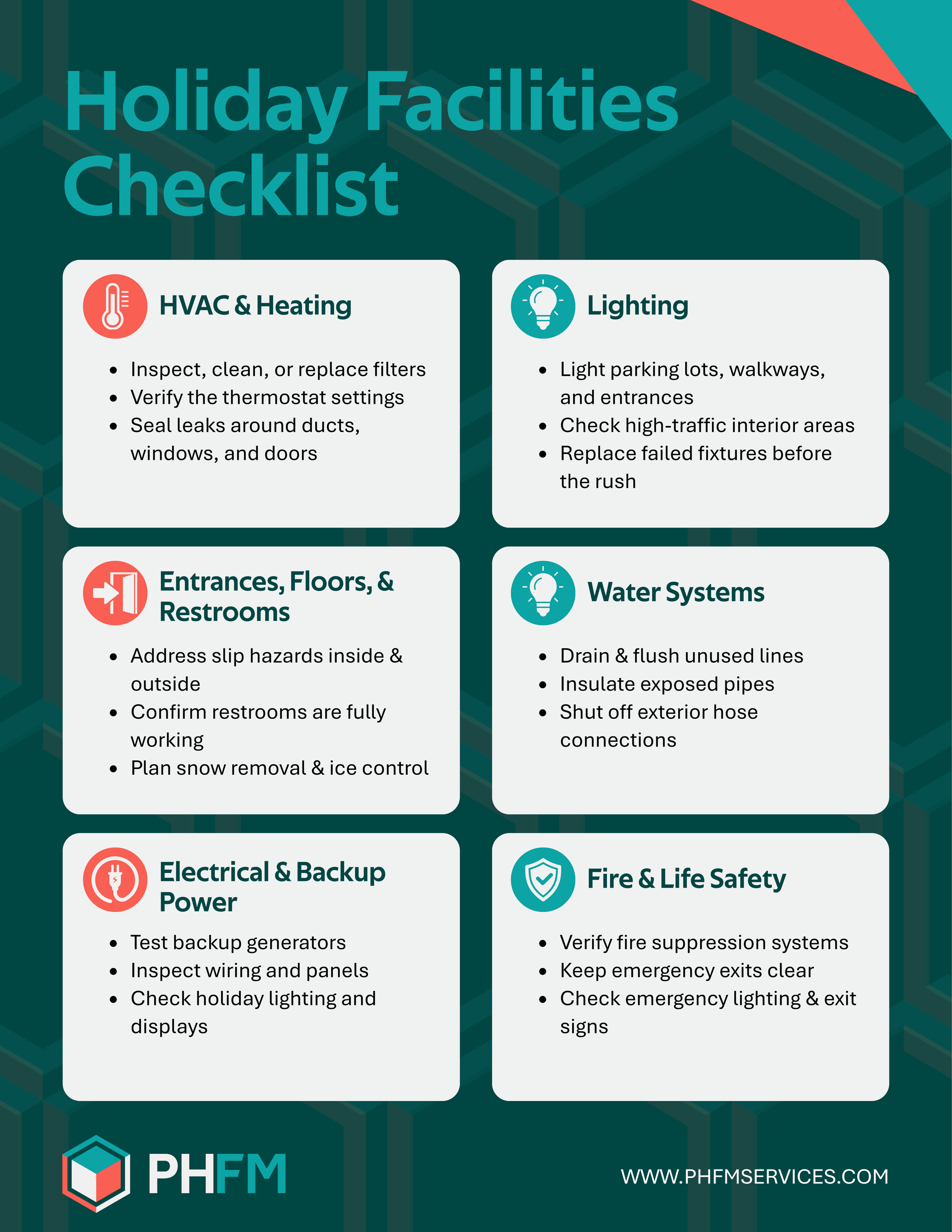
Multi-site portfolios prepare for the holiday season by inspecting and servicing the building systems most likely to fail under heavier traffic and colder weather, then scheduling repairs before customer volume peaks. The checklist below covers the priority areas inside commercial buildings.
HVAC and Heating
Heating systems carry the heaviest load of the season, often while doors open and close constantly with customer traffic. According to the U.S. Department of Energy’s Better Buildings Solution Center, operations and maintenance programs targeting energy efficiency can save 5 to 20 percent on energy bills without significant capital investment.
- Inspect, clean, or replace filters
- Verify thermostat functionality and settings
- Check ducts, windows, and doors for leaks or areas of heat loss
- Confirm heating is consistent across sales floors, offices, and back-of-house areas
Exterior and Interior Lighting
With shorter days, lighting directly affects how safe and welcoming a location feels during business hours.
- Confirm parking lots, walkways, and entrances are well lit for safe passage
- Check lighting in high-traffic interior areas such as aisles, checkout lanes, and restrooms
- Replace failed or dim fixtures before the rush
Entrances, Floors, and Restrooms
With shorter days, lighting directly affects how safe and welcoming a location feels during business hours.
- Confirm parking lots, walkways, and entrances are well lit for safe passage
- Check lighting in high-traffic interior areas such as aisles, checkout lanes, and restrooms
- Replace failed or dim fixtures before the rush
Water Systems
Freezing temperatures put plumbing at risk, especially in unused or exposed lines.
- Drain and flush unused lines to prevent freezing
- Insulate exposed pipes along exterior walls
- Shut off and drain exterior hose connections
Electrical Systems and Backup Power
Added displays and longer hours increase electrical demand, while winter storms raise the stakes of outages.
- Test backup generators
- Inspect wiring and electrical panels
- Replace bulbs and check holiday lighting and displays for safe installation
Fire and Life Safety Systems
Holiday displays, extra inventory, and seasonal staff all affect how a building performs in an emergency.
- Verify fire suppression systems are operational
- Confirm emergency exits are clear and accessible, including stockrooms holding extra inventory
- Check emergency lighting, exit signs, and other safety equipment
The Benefits of Preventive Maintenance During the Holiday Season
Preparing ahead of the holidays brings the benefits of preventive maintenance to the weeks with the highest demand.
- Fewer Unexpected Breakdowns: Systems serviced before peak demand are less likely to fail during it.
- Optimal Equipment Performance: Clean filters, sealed ducts, and calibrated thermostats help equipment run efficiently under heavier loads.
- Lower Emergency Repair Costs: Planned work avoids the after-hours labor, rush-shipped parts, and premium dispatch fees that come with holiday emergencies. The same Department of Energy guide estimates that preventive maintenance saves 12 to 18 percent in maintenance costs compared to a reactive one.
- A Safer Environment: Well-lit, clear, and fully functional locations protect staff and customers alike.
When Should the Holiday Preparation Begin?
With the holiday season coming up quickly, the most effective approach is prioritizing. Focusing on heating, restrooms, entrances, and life safety systems addresses the issues with the greatest impact on customers and staff. Lower-priority items can be scheduled for slower weeks between holiday peaks or after the new year.
Preparation continues once the season begins. Regular walkthroughs during November and December help catch new issues early, especially after storms or cold snaps.
Supporting Holiday Readiness Across Every Location
Preparing one building for the holidays is manageable. Preparing hundreds is a different challenge. Facilities teams need a clear view of which sites are ready and where issues remain before traffic peaks.
PHFM helps multi-site portfolios prepare for the holidays with planned preventive maintenance and seasonal inspections ahead of the rush, along with responsive service through a nationwide vendor network when something does fail. PHFM’s exterior services, including snow and ice management and parking lot maintenance, help keep entrances and walkways safe as the weather turns.
With MetryX, facilities teams can see work order history across locations, making it easier to know where each site stands heading into the holidays. The result is fewer surprises, more predictable costs, and locations ready for the busiest time of the year.
To learn more about preparing your portfolio for the holiday season, connect with the PHFM team.