Building a Culture that Protects: How Facilities Teams Approach National Safety Month
From Reactive Fixes to a Real Culture of Safety
Every year, June is recognized as National Safety Month. It’s a reminder that safety isn’t something that can be put on the back burner; it’s a discipline. For facilities maintenance professionals, that message carries real weight. The work you do keeps buildings running, properties looking their best, and customers moving safely through places they trust. But that work also puts you in some of the most hazard-rich environments of any industry.
Now in its 30th year, the National Safety Council’s National Safety Month is a call to stop treating safety as a reactive exercise. Real discipline comes from prevention, planning, and a shared culture of awareness that protects your teams and everyone who visits your properties.
Stop Problems Before They Start
The most powerful safety measure is the one that keeps bad situations from starting. Before any job begins – a routine HVAC inspection, a roof access task, or an electrical repair – the right questions should already be answered: What are the risks? Do we have the right PPE? Who knows the plan if something goes wrong?
Facilities work means a different set of conditions every day. That’s exactly why, across every site we service, pre-task planning and hazard identification are the standard we hold our teams to. Not a guideline, an expectation.
The Risks Are Real
Facilities maintenance and exterior service teams face a broader range of hazards than teams in many other industries.
Technicians may encounter:
- Electrical Hazards
- Work at height (ladders, roof access)
- Chemical exposure
- Heavy equipment
- Confined space entry
Physical wear adds another layer, too. Repetitive strain and heat stress don’t announce themselves the way a visible hazard does. They accumulate quietly, which is why we treat them with the same proactive attention as any equipment or environmental risk.
Among the most common injuries are slips, trips, and falls. According to the
Bureau of Labor Statistics, they accounted for nearly 480,000 nonfatal workplace injuries in 2024, making them one of the top three causes of injuries that result in lost work time. Often, the cause is something simple: a walkway that wasn’t cleared, a hazard that wasn’t flagged, or an entryway that didn’t get attention when needed.
Heat Safety Matters Right Now
June marks the beginning of some of the most physically demanding weeks of the year for field teams and vendors working in outdoor conditions. According to the National Safety Council, exposure to environmental heat resulted in more than 7,100 cases involving days away from work, restricted duty, or job transfer across 2023 and 2024. And that number only reflects what actually gets reported. Heat safety requires a real operational plan that accounts for the environment and the work being done.
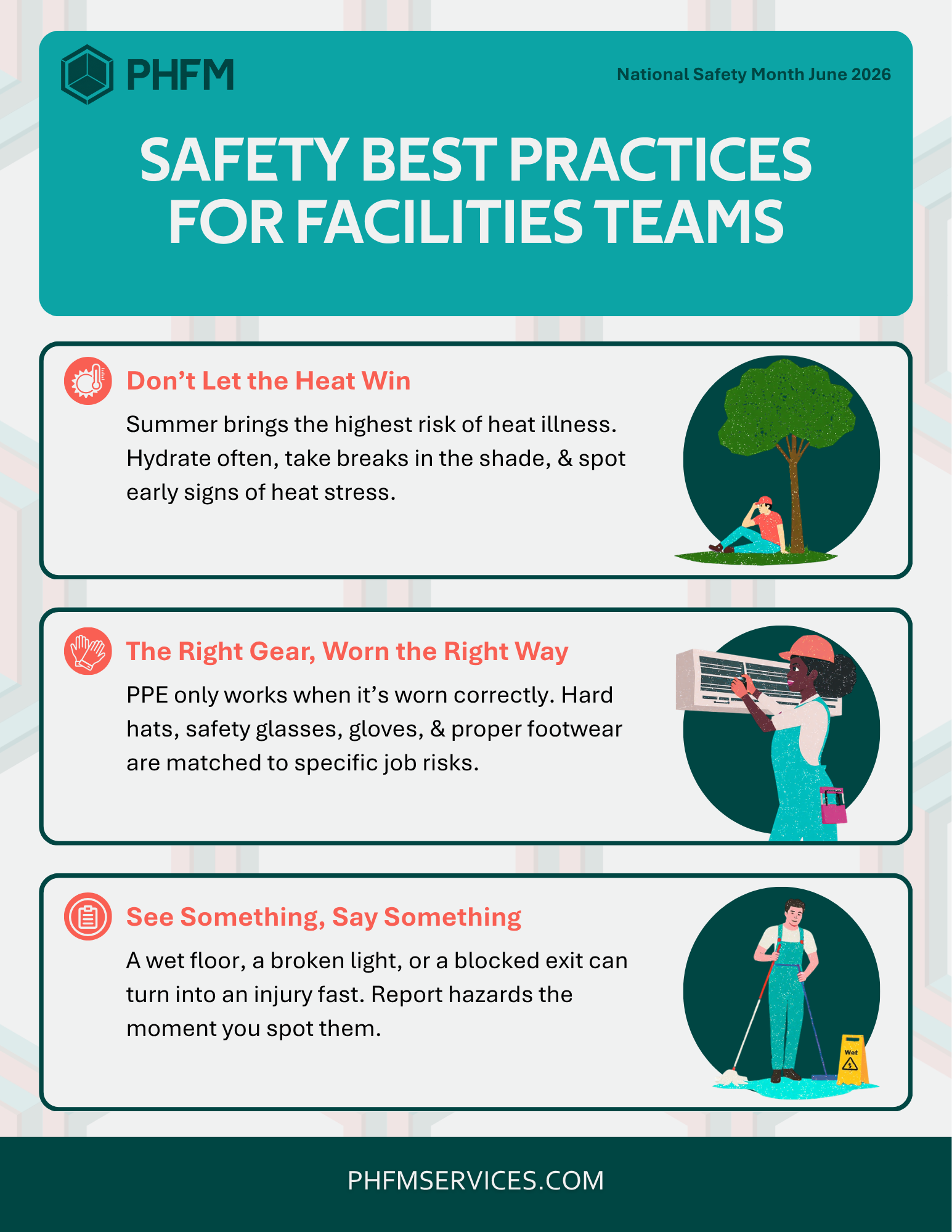
This is more than a simple reminder to drink water. It means scheduling rest breaks before fatigue sets in, identifying shaded or indoor areas at each site before work begins, and setting a clear expectation that no task is urgent enough to push through the warning signs of heat stress. Early signals show up as heavy sweating, dizziness, nausea, and rapid heartbeat – and recognizing these in yourself or teammates is an important skill to have heading into the summer months. Heat stress escalates quickly, and early awareness can prevent medical emergencies.
The Right Gear, Worn the Right Way
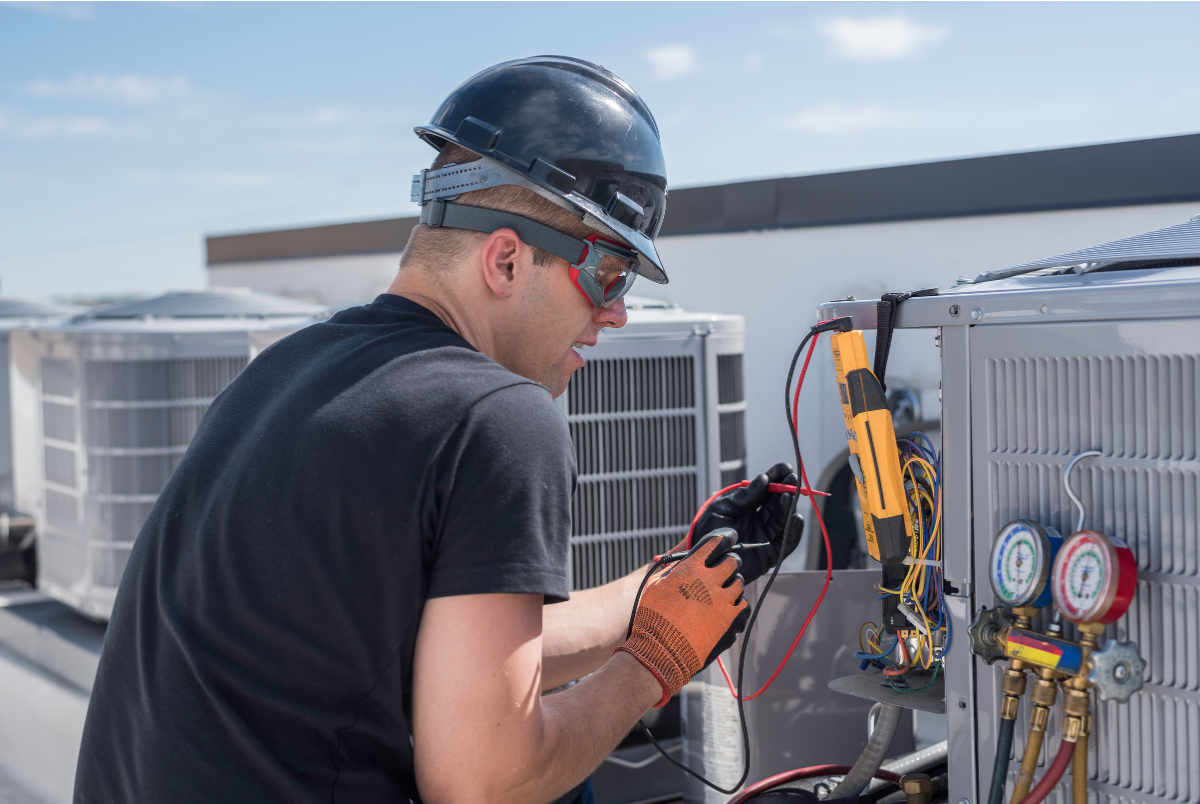
PPE protects lives, but only when it’s used correctly and consistently. Hard hats, safety glasses, gloves, and proper footwear are matched to specific risks to keep workers safe. Jobsite awareness is more than knowing where the hazards are; it means staying present and realizing that shortcuts can create the risks they’re meant to avoid.
Across our network, PPE standards and safety protocols aren’t optional; they’re what every team is held to, every time.
See Something, Say Something
One of the most effective things any team member can do is report a hazard when they see one. A wet floor that hasn’t been marked. A broken exterior light. An area that needs attention before it becomes a problem.
Early reporting protects your teams, visiting customers, and your properties. Creating an environment where people feel comfortable speaking up is what moves safety from policy to practice.
The Link Between Preventive Maintenance and Property Safety
Well-maintained facilities don’t just look better. They function safer. Reliable lighting, clear walkways, properly functioning HVAC systems, well-marked entrances and exits, and fast response to repairs all create environments where customers and employees can move with confidence. When something goes wrong, a safety-focused team responds faster because the culture already demands it.
The connection between the daily work of facilities teams and the experience of every person who walks through your properties’ doors is worth recognizing during National Safety Month.
What PHFM is Doing Every Day
For PHFM, National Safety Month reflects what our teams and vendors practice year-round. Coordinating safety standards across a network of 7,500+ vendors doesn’t happen by default; it requires consistent expectations, site-level accountability, and a culture where safe work is the standard, not the exception. That means pre-job hazard assessments and PPE compliance aren’t checkboxes; they’re the expectation we hold every team to, at every site we service.
This month, we’re reinforcing those standards through conversations and a renewed commitment to the work that makes them possible, because the standard we hold our network to isn’t a seasonal priority. It’s the expectation every day of the year.
Ready to see what that consistency looks like across your sites? Let’s talk about your portfolio.